
For a large and growing share of younger users, the first stop for a question is not Google or ChatGPT — it is the TikTok search bar. Nearly half of US consumers now treat TikTok as a search engine, and its search ranking works differently from both web search and TikTok's own For You feed. It indexes what you say, what you show on screen, and what you write, and it rewards relevance and completion over follower count. This is the discovery playbook for TikTok search, sitting alongside the answer-engine spokes under the broader pillar on generative engine optimization.
Key takeaways
- What TikTok search rewards — Keyword relevance across spoken audio, on-screen text, and caption; high completion rate; native creation; and specific search-phrase targeting over broad hashtags.
- What it cares less about — Follower count and raw view count, which carry little search weight. A 50k-view video can outrank a 250k-view one on relevance.
- The mechanism — Three indexing layers per video — ASR transcribes the audio, OCR reads on-screen text, and the caption and hashtags are parsed. You are optimising for all three at once.
- How long it takes — Faster than web SEO. A well-optimised native video can surface in search within days, though search longevity depends on sustained completion rate.
How TikTok search decides what to rank
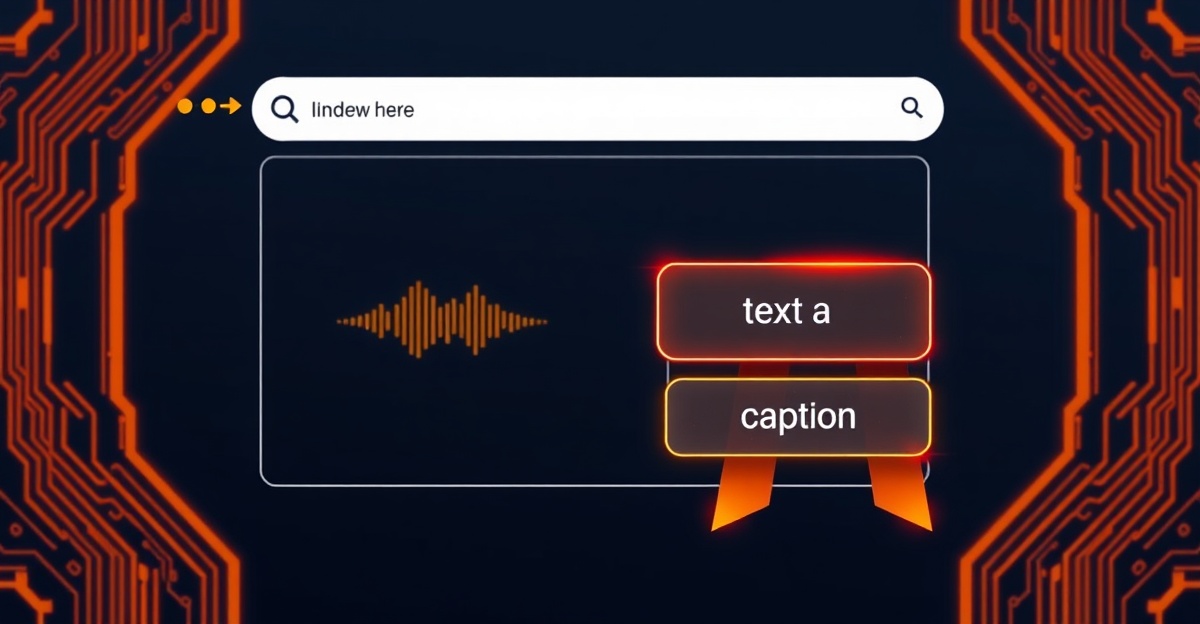
The thing to internalise is that TikTok reads a video, not just its caption. Three indexing layers run on every upload, and search matches a query against all of them.
- Transcribe the spoken audio with automatic speech recognition into a searchable transcript.
- Read the on-screen text with OCR, including captions and overlaid words.
- Parse the written caption and hashtags.
- Match a searcher's query against all three layers and rank on relevance.
- Modulate the ranking by engagement, with completion rate the strongest multiplier.
Two implications follow. First, alignment across the three layers is the whole game: a video whose audio, on-screen text, and caption all say the same keyword gives TikTok an unambiguous topic signal and ranks far better than one relying on a single layer. Second, because search leans on relevance more than the personalised velocity that drives the For You feed, a small, precisely-targeted account can win search placements that it could never win in the feed.
The playbook
Tactics ordered by leverage, calibrated for TikTok search rather than the feed. The throughline is feeding all three indexing layers the same clear signal.
- Say the keyword aloud in the first thirty seconds. Speech recognition transcribes your audio and indexes it, so verbalising your target phrase early is one of the strongest and most underused search signals. It also primes the viewer, which helps completion rate.
- Put the keyword in on-screen text and the caption. Reinforce the spoken phrase with the same words on screen and in the caption so all three layers agree. This alignment is what separates a video that ranks for its target query from one that merely exists.
- Create natively in TikTok. The algorithm de-prioritises uploaded external video. Build the captions, text, and effects inside TikTok's tools rather than burning them into an MP4 elsewhere, so the platform reads the content as native and indexes the text layers correctly.
- Engineer for completion rate. Completion is the dominant engagement multiplier in search ranking. Open with a hook that states the payoff, keep the video tight, and resolve the promise — a high completion rate both lifts the initial ranking and sustains it over time.
- Target specific search phrases, not broad hashtags. Optimise for the exact questions your audience types, which are usually more specific than the biggest generic tags. A handful of precise, relevant hashtags paired with matching audio and on-screen text beats a wall of broad ones.
- Build topical series. Clusters of videos answering related search queries signal topical depth and give TikTok more chances to rank you across a theme. Treat your content like a content hub: a pillar topic with spokes, the same structure that works on the open web.
What's different from YouTube, Reddit, and the AI engines
TikTok search is a discovery destination, not a feed into the answer engines, which is the cleanest way to place it against the other surfaces in this cluster.
- YouTube is the other video-search giant, but it rewards watch time on long-form content and is a strong AI-citation source, where TikTok is neither. The YouTube playbook is at how to rank on YouTube.
- Reddit is text-first and the dominant AI-citation source; TikTok is video-first and rarely cited by AI. They reach different audiences in different modes. The Reddit playbook is at how to rank on Reddit.
- The AI answer engines rarely pull from TikTok, so optimising for TikTok will not lift your ChatGPT or Perplexity citations. Treat TikTok as a parallel audience — the searchers who never leave the app — rather than part of your GEO funnel. The cross-engine theory is in the GEO pillar.
Measurement
TikTok gives you more native visibility than the AI engines do. Build the loop in three layers:
- Traffic-source breakdown. TikTok's native analytics show how much of a video's reach came from search versus the For You feed. A rising search share is the direct signal that your keyword alignment is working.
- Search-term insights. Business accounts can see which search terms surface their content. Use this to find the phrases you already rank for and the adjacent ones worth a dedicated video.
- Completion rate as a leading indicator. Because completion drives search longevity, track it per video; a strong opening completion rate predicts whether a video will hold its search placement.
Related reads
Frequently asked questions
How does TikTok search decide what to rank?
TikTok search is distinct from the For You feed. It indexes every video across three layers — spoken audio transcribed by automatic speech recognition, on-screen text read by OCR, and the caption plus hashtags — and matches a searcher's query against all of them. Keyword relevance across those layers is the primary signal, modulated by engagement, especially completion rate. Unlike the feed, search leans more on relevance than on personalised engagement velocity, which is why a precisely-targeted small video can rank above a viral one.
Why does saying the keyword out loud matter?
Because TikTok transcribes your audio with speech recognition and indexes the transcript for search. A keyword spoken in the first thirty seconds, reinforced by the same words in on-screen text and the caption, hits all three indexing layers at once and gives TikTok an unambiguous signal of what the video is about. Videos that rely only on a caption keyword, while the audio and on-screen text say nothing relevant, rank worse than those that align all three.
Does follower count help with TikTok search ranking?
Surprisingly little. TikTok search weights relevance and engagement quality far more than account size, and completion rate is the dominant engagement multiplier. A 54,000-view video can outrank a 250,000-view one if it matches the query more precisely and holds attention better. This is good news for smaller accounts: search is one of the few surfaces where a new creator can compete with an established one on the merits of a single well-made video.
Should I upload videos I made outside TikTok?
Avoid it where you can. TikTok's algorithm strongly favours content created natively in its own tools and de-prioritises uploaded external MP4s, reportedly by a wide margin. If you must repurpose external footage, rebuild it inside TikTok — add the captions, text, and effects natively rather than burning them in elsewhere — so the platform reads it as native content and indexes the text layers properly.
Is TikTok content cited by AI search engines?
Much less than Reddit or YouTube. TikTok video is not systematically cited as a source by ChatGPT, Perplexity, or Google AI Overviews, partly because its content is harder to extract and verify than text or long-form video transcripts. Google does surface TikTok videos in some video-search results, but TikTok's real value is direct discovery within the app, not feeding the answer engines. If AI citation is your goal, prioritise Reddit and YouTube; if reaching searchers directly is the goal, TikTok is its own destination.
Do hashtags still matter for TikTok search?
They help, but specificity beats volume. A few precise, relevant hashtags that match how people actually search outperform a wall of broad, high-competition tags. Think of hashtags as one of the three indexing layers rather than the whole strategy: pair them with a spoken keyword and on-screen text on the same theme, and target the specific search phrases your audience uses rather than the biggest generic tags.
How do I measure TikTok search performance?
Use TikTok's native analytics, where the traffic-source breakdown shows how much of a video's reach came from search versus the For You feed. Rising search-sourced views on a video signal that your keyword alignment is working. Track which search terms surface your content via the search-insights tools available to business accounts, and watch completion rate as the leading indicator of whether a video will hold its search ranking over time.
Ready to Find the Right AI Tools?
Browse our data-driven rankings to find the best AI tools for your team.