
OpenClaw
Hermes Agent
Best for teams coordinating multiple agents across channels and models. The ACP protocol and ClawHub marketplace create an ecosystem that Hermes can't match for multi-agent workflows.
Best for solo developers who want an agent that improves with use. Persistent memory and self-correcting skills make it feel like a dedicated pair programmer rather than a stateless tool.
- Any model provider
- Multi-channel dispatch
- ACP protocol
- ClawHub marketplace
- Self-improving skills
- Persistent memory
- Lightweight
- Strong code accuracy
- Complex to self-host
- Memory is plugin-dependent
- Single-model
- No multi-channel
- No enterprise features
Key Takeaways
- OpenClaw — Best for teams that need multi-model orchestration across channels. The ClawHub marketplace and ACP protocol let you compose agent workflows from pre-built modules. 369K GitHub stars signal massive community momentum.
- Hermes Agent — Best for solo developers and small teams that want an agent that gets better over time. Persistent memory and self-improving skills mean fewer repeated instructions. Nous Research's fine-tuning pedigree shows in the model's coding accuracy.
- Architecture split — OpenClaw is a runtime. Hermes Agent is a specialist. OpenClaw orchestrates many models and channels. Hermes Agent goes deep on one codebase with one developer. Pick based on whether your bottleneck is coordination or code quality.
Two philosophies for AI coding agents
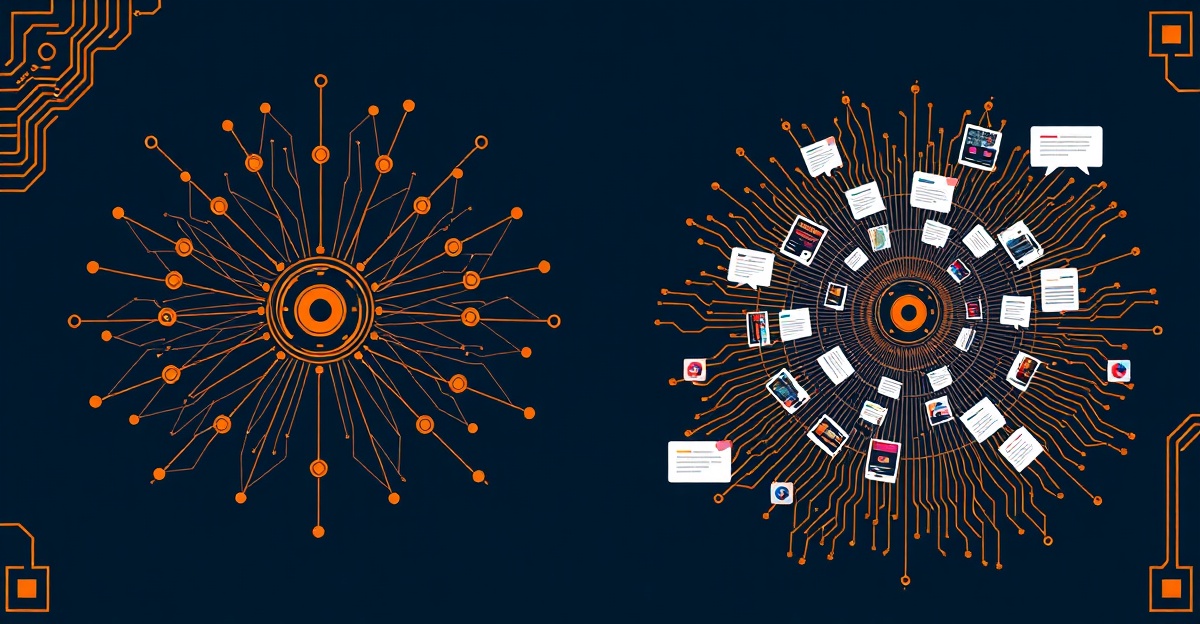
OpenClaw and Hermes Agent represent opposite design bets in the AI coding agent space. OpenClaw is a runtime: a message-driven platform that connects any LLM to any channel and orchestrates workflows across agents. Hermes Agent is a specialist: a single-focus coding assistant built on Nous Research's fine-tuned models with built-in memory that accumulates context across sessions.
The difference shows up in daily use. OpenClaw teams dispatch agents from Slack, compose workflows from ClawHub modules, and coordinate multiple agents via ACP. A Hermes user opens their terminal, starts coding, and the agent remembers what they worked on yesterday. Both are open source. Both are self-hostable. But the problems they solve are different.
Feature Comparison
Side-by-side across architecture, memory, messaging, pricing, and enterprise readiness.
Feature Matrix
| Feature | OpenClaw | Hermes Agent |
|---|---|---|
| Architecture | ||
| Core Design | Message-driven runtime, multi-model | Single-agent, deep-context specialist |
| Model Support | Any model via provider plugins | Hermes fine-tunes (Nous Research) |
| Self-Hosting | Docker, Kubernetes, cloud | Local-first, single binary |
| Open Source | Apache 2.0 | Apache 2.0 |
| Memory & Skills | ||
| Persistent Memory | Plugin-based, external stores | Built-in session + long-term memory |
| Skill Learning | ClawHub pre-built modules | Self-improving from corrections |
| Context Window | Depends on model provider | 128K+ with Hermes 3 405B |
| Codebase Indexing | Via third-party plugins | Native repo-aware indexing |
| Messaging & Channels | ||
| Multi-Channel | Slack, Discord, API, CLI, web | CLI and API |
| Agent-to-Agent | ACP protocol, native routing | |
| Webhook Support | Inbound and outbound | Outbound only |
| Pricing | ||
| Self-Hosted | Free (open source) | Free (open source) |
| Cloud Hosted | ClawCloud from $29/mo | No official cloud offering |
| Enterprise | Custom pricing, SSO, audit logs | Community support only |
| Enterprise | ||
| SSO / RBAC | SAML, OIDC, role-based access | |
| Audit Logging | Full action audit trail | Local logs only |
| Compliance | SOC2 (ClawCloud) | Self-hosted, your responsibility |
OpenClaw: The Orchestration Platform
OpenClaw started as a chatbot framework and grew into a full agent runtime. With 369K GitHub stars, it has the largest community of any open-source AI agent platform. The core value proposition is simple: plug in any model, connect any channel, compose workflows from pre-built modules.
The ACP (Agent Communication Protocol) is what separates OpenClaw from simpler frameworks. It defines how agents discover each other, share context, and delegate tasks. For a team running a code review agent, a testing agent, and a deployment agent, ACP handles the handoffs without custom glue code. This matters at scale. Teams with three or more agents report that ad-hoc integrations break within weeks. ACP provides the structure to keep them running.
ClawHub extends this with a marketplace of over 2,000 pre-built modules: RAG pipelines, tool integrations, prompt templates, and complete agent configurations. You can go from zero to a working code review pipeline in under an hour if someone has already published a module for your stack.
The cost is complexity. Self-hosting OpenClaw means managing Docker containers, configuring model providers, setting up channel integrations, and maintaining ClawHub dependencies. ClawCloud ($29/month and up) removes the infrastructure burden but adds another SaaS bill. For a solo developer who just wants help writing code, this is overhead without clear payoff.
OpenClaw
- Any model, any provider, no vendor lock-in
- ACP protocol enables structured agent-to-agent communication
- ClawHub marketplace with 2,000+ pre-built modules
- Multi-channel: Slack, Discord, API, CLI, web UI
- Enterprise features: SSO, RBAC, audit logging
- Higher operational complexity to self-host and configure
- Memory is plugin-dependent, not built into the core
- Breadth over depth: jack of all trades, master of none
- ClawCloud pricing adds up for multiple agents
Hermes Agent: The Learning Specialist
Hermes Agent comes from Nous Research, the team behind some of the highest-performing open-source fine-tuned models. Their bet is that a coding agent should get better the more you use it, not start from zero every session.
The persistent memory system is the defining feature. Hermes Agent tracks your coding patterns, project structure, naming conventions, and past corrections across sessions. After a week of use, it stops suggesting patterns you've rejected and starts defaulting to your preferred style. This is different from OpenClaw's plugin-based memory, which requires explicit configuration and external storage. Hermes memory is built into the core.
Self-improving skills take this further. When you correct the agent, it doesn't just fix the current output. It updates an internal skill representation so the same mistake doesn't recur. Over time, the agent develops a personalized skill set that reflects your specific codebase and preferences. Developers using Hermes Agent for 30+ days report measurably fewer corrections than in the first week.
The limitation is scope. Hermes Agent is a single-agent system with no multi-channel support and no agent-to-agent communication. It runs in your terminal or via API. There's no Slack bot, no Discord integration, no managed cloud offering. For a solo developer or a team under five, this is fine. For a 50-person engineering org that needs agents across multiple systems, it's a non-starter.
Hermes Agent
- Persistent memory across sessions improves over time
- Self-improving skills reduce repeated instructions
- Nous Research fine-tuning produces strong code accuracy
- Lightweight: single binary, low resource footprint
- Deep codebase awareness from native repo indexing
- Single-model ecosystem (Hermes fine-tunes only)
- No multi-channel support beyond CLI and API
- No official cloud hosting or managed service
- Limited enterprise features (no SSO, no RBAC)
Field reports: why solo builders are switching in 2026
The spec sheet is one thing; what practitioners report after months of daily use is another. Through the first half of 2026 a consistent migration pattern showed up across builder communities — solo operators and small teams moving from OpenClaw to Hermes — and the reasons were strikingly uniform. They are worth recording, with one caveat: this is operator sentiment from small-team use, not a controlled benchmark, and it does not exercise the multi-agent orchestration that is OpenClaw's actual strength.
The recurring complaints about OpenClaw at small scale were operational rather than architectural: memory that did not survive between sessions, scheduled jobs that confirmed but never fired, and updates that broke a working setup and forced an SSH session just to restart the service. Several builders described spending more time maintaining the agent than being served by it. "OpenClaw has just been a constant bug-fix project for me," reported AI marketer Daniel Blakely; "swapped to Hermes and been very happy."
The pull toward Hermes was stability and visibility. "It feels like a more mature and stable system," said Leif Uwe Vogelsang, who moved over in April after repeated update breakages. The features operators cite most are exactly the ones the feature matrix above lists as Hermes strengths: memory that maintains itself, skills that form from corrections, and a transparent view of every tool call rather than digging through reasoning configs to reconstruct what the agent did.
On security — the dimension where OpenClaw has drawn the most scrutiny, and the reason NVIDIA's sandboxed NemoClaw wrapper exists — operators report that Hermes defaults to read-only access, requires explicit approval before it writes or sends, and flags privilege-escalation attempts rather than silently complying. Multi-profile separation lets a single install run isolated agents per project without cross-contamination. None of this makes any agent safe by default, but it gives an operator hard rules that actually hold.
The honest framing is the one this comparison opened with: these tools are not really competing for the same job. The builders switching to Hermes are the solo and small-team users for whom OpenClaw's orchestration was overhead — not the teams running fleets of agents that need to talk to each other, for whom OpenClaw's ACP and ClawHub remain the reason to stay. A common pattern among the switchers is to keep both: Hermes as the always-on persistent layer, and Claude Code for deep build sessions. (Field sentiment compiled from builder communities including The Vibe Marketer, May 2026.)
Choose OpenClaw if... / Choose Hermes if...
Best for multi-agent teams
- Your team needs multi-model orchestration across providers
- You dispatch agents from Slack or Discord
- You want a marketplace of pre-built agent modules
- Enterprise compliance (SSO, audit logs) is required
- You coordinate multiple agents on shared tasks
Best for deep single-codebase work
- You want an agent that learns your patterns over time
- You work solo or in a small team (under 5 developers)
- Local-first execution and data privacy matter
- You prefer depth on one codebase over breadth across channels
- Low operational overhead is a priority
Our take
These two tools don't really compete. They solve different problems for different team shapes. OpenClaw is infrastructure: you build agent systems on top of it. Hermes Agent is a product: you use it to write better code, faster, with less repetition over time.
If you run more than three agents and need them to communicate, OpenClaw is the only serious open-source option. The ACP protocol and ClawHub marketplace give it a structural advantage that Hermes can't replicate without rebuilding its entire architecture.
If you're a single developer or a small team that wants a coding agent with genuine learning capability, Hermes Agent's persistent memory and self-improving skills deliver something no other open-source agent offers. The agent genuinely gets better the more you use it. That compounding effect matters more than any single-session benchmark.
For the broader AI agentic coding tools comparison, both represent important design directions. The market will likely consolidate around platforms (OpenClaw's approach) with specialist agents (Hermes's approach) running inside them.
Can OpenClaw use Hermes models as a backend?
Yes. OpenClaw's provider plugin system supports any OpenAI-compatible API. You can point it at a self-hosted Hermes 3 instance via vLLM or Ollama. This gives you OpenClaw's orchestration layer with Hermes's coding accuracy, though you lose Hermes Agent's built-in memory and skill system.
What is ACP and why does it matter?
ACP (Agent Communication Protocol) is OpenClaw's standard for structured agent-to-agent messaging. It defines how agents discover each other, exchange context, and hand off tasks. For teams running multiple agents, ACP prevents the brittle point-to-point integrations that break when you add a third or fourth agent to a workflow.
Does Hermes Agent work offline?
If you run Hermes models locally (via Ollama or llama.cpp), the entire stack works without an internet connection. The agent, memory, and skill system are all local. OpenClaw requires network access to reach its model providers unless you also self-host the models, which adds significant infrastructure.
Which has better code quality out of the box?
Hermes Agent produces more consistent code on first pass, especially for Python and TypeScript. Nous Research's fine-tuning dataset is heavily weighted toward real-world coding tasks. OpenClaw's code quality depends entirely on which model you connect. With GPT-5.3 or Claude Sonnet, it matches or exceeds Hermes. With smaller models, it falls behind.
Ready to Find the Right AI Tools?
Browse our data-driven rankings to find the best AI tools for your team.